
Ant Control Information & Identification Guide
Lasius niger & Monomorium pharaonis
An ant invasion can transform your peaceful home into a frustrating battleground, with endless trails of insects marching through your kitchen and contaminating your food. We understand how overwhelming it feels to discover ants have colonised your property - one day there are none, the next day there are thousands. At Pest Pro London, we specialise in permanent ant colony elimination, not just surface treatment. These highly organised social insects require professional intervention because their underground colonies can contain multiple queens and hundreds of thousands of workers, making complete eradication impossible without expert knowledge and targeted treatment methods.
Professional treatment recommended within 48 hours
Quick Facts
How to Identify Ant Control
Physical Features
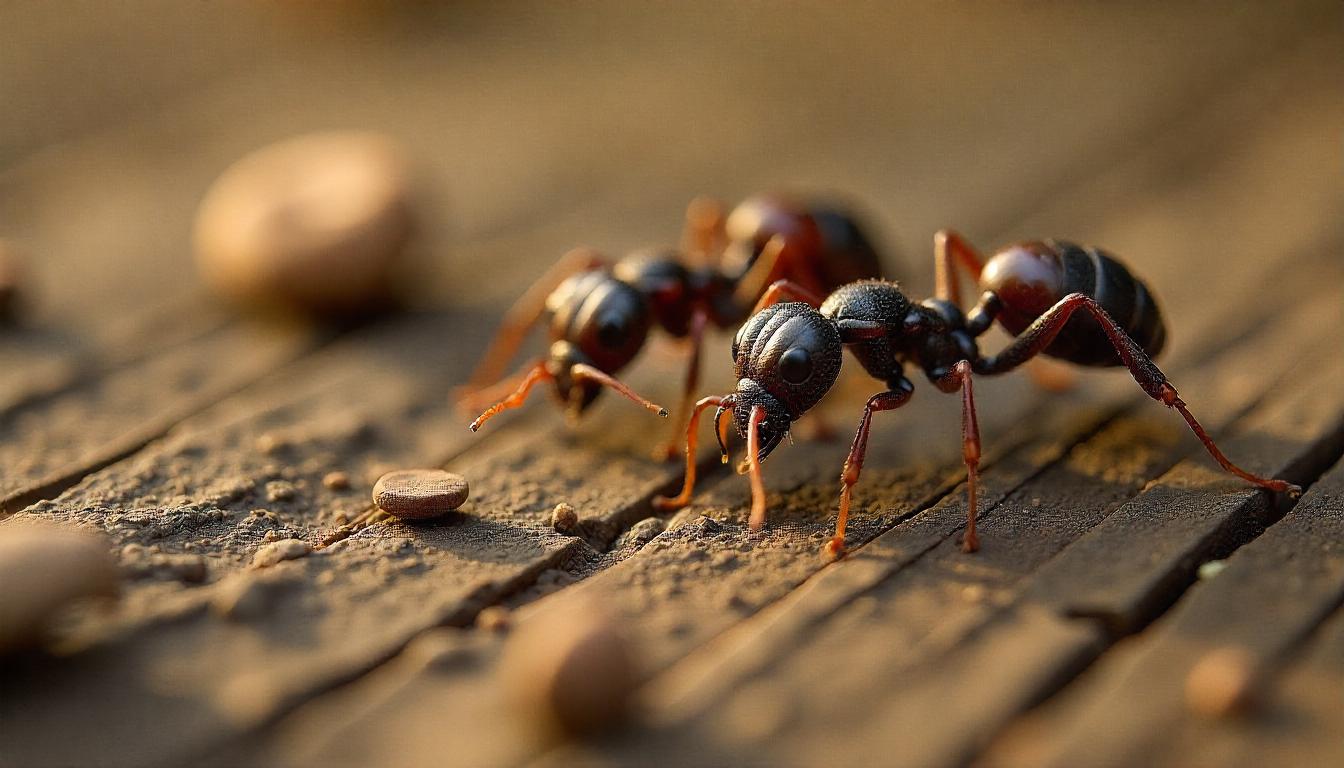
- Three distinct body segments (head, thorax, abdomen)
- Distinctive elbowed antennae with club-shaped ends
- Pronounced narrow waist between thorax and abdomen
- Six jointed legs with strong grip
- Compound eyes and powerful mandibles
- Reproductive ants have wings during swarming period
- Visible metapleural glands (species-specific identification)
- Segmented antennae with 11-12 segments
Sounds & Signs
- Generally silent to human ears
- Possible faint rustling in large infestations
- Chemical communication through pheromone trails
Droppings: Microscopic and not visible to naked eye
Tracks: Visible pheromone trails on surfaces, small excavated soil mounds at nest entrances, tiny debris piles near entry points
Common Hiding Spots
- Behind kitchen units and under appliances
- Along skirting boards and architraves
- Inside wall insulation and cavity walls
- Under patio slabs and block paving
- Plant pots and garden containers
- Electrical junction boxes and switch plates
- Behind bathroom tiles and around pipework
- Window frames and door thresholds
- Compost bins and garden storage areas
Professional Treatment
Our Treatment Methods
- Professional gel baits targeted to specific ant species
- Granular baits for outdoor colony treatment
- Residual spray treatments for perimeter protection
- Dust formulations for wall cavity applications
- Advanced colony elimination bait systems
- Targeted injection treatments for nest sites
- Integrated Pest Management (IPM) approaches
- Specialist Pharaoh ant elimination protocols
Treatment Timeline: Initial assessment within 24 hours, first treatment within 48 hours, colony elimination typically 2-6 weeks depending on species and colony size
Follow-up: Progress monitoring at 1-2 week intervals, bait station maintenance, final clearance inspection after 4-6 weeks, annual preventive service recommended
Preparation Required
- Deep clean all surfaces to remove existing pheromone trails
- Remove all alternative food sources during treatment period
- Document and photograph all ant trail locations
- Clear access to all treatment areas including behind appliances
- Secure pets and children during professional application
- Identify and mark all suspected entry points
- Remove or cover food items in treatment areas
- Provide access to cavity walls and roof spaces if required
Ant Control in London
Common Hotspots
Most affected boroughs:
Common property types:
- All residential property types affected
- Hospitals and healthcare facilities (particular Pharaoh ant risk)
- Ground floor flats with garden access
- Restaurant kitchens and food preparation areas
- Care homes and sheltered accommodation
- Schools with food service areas
- Office buildings with kitchen facilities
- Period properties with structural entry points
Seasonal Activity in London
Current Season Activity
Increased indoor invasions as outdoor temperatures drop, preparation for overwintering
Colony expansion begins with increased foraging activity, first appearance of scouts in homes
Peak activity period with flying ant days (typically July-August), maximum colony size and aggressive foraging
Increased indoor invasions as outdoor temperatures drop, preparation for overwintering
Pharaoh ants remain active in heated buildings, garden ants largely dormant but may appear during warm spells
Ant Myths vs Facts
Myth
Ants are only a summer problem
Fact
While ants are most visible in warm weather, Pharaoh's Ants infest heated buildings year-round. Garden Ants establish indoor colonies in walls and under floors during winter.
Myth
Following ants leads you to the nest
Fact
Ant trails often lead to wall voids, subfloor spaces, or external nests 30+ meters away. Many species have multiple satellite nests making nest location extremely difficult.
Myth
Killing visible ants solves the problem
Fact
Visible ants are 5-10% of the colony. Queens produce 800-1,500 eggs daily. Surface sprays only kill foragers while the colony continues expanding in hidden locations.
Myth
All ants are the same and need the same treatment
Fact
Garden Ants require gel baits targeting outdoor nests. Pharaoh's Ants need specialist insect growth regulators. Wrong treatment causes colony budding (splitting into multiple nests).
Myth
Ants only come indoors for food
Fact
Ants seek warmth, moisture, and shelter. They establish permanent nests in wall voids, under floors, and in roof spaces - even in spotlessly clean homes.
Myth
Store-bought ant powder eliminates infestations
Fact
Repellent powders make ants avoid the area, forcing them to create new trails. Professional gel baits are carried back to the nest, eliminating queens and brood.
Myth
Ants are harmless and just a nuisance
Fact
Pharaoh's Ants transmit Salmonella, Staphylococcus, and Streptococcus. They infest hospitals, care homes, and contaminate sterile medical equipment and wound dressings.
Myth
Natural remedies like vinegar and lemon work
Fact
Vinegar temporarily disrupts pheromone trails but doesn't kill ants or affect the colony. Within hours, scouts establish new trails around the treated area.
Myth
Ant problems resolve themselves after a few weeks
Fact
Untreated ant colonies grow exponentially. Garden Ant colonies reach 40,000+ workers. Pharaoh's Ants establish interconnected super-colonies with multiple queens across entire buildings.
Myth
You only have one ant colony in your property
Fact
Mature colonies create satellite nests. Pharaoh's Ants commonly have 5-10 interconnected nests in wall voids, floors, and ceiling spaces throughout a single building.
Garden Ant vs Pharaoh's Ant
Understanding the difference between outdoor and indoor ant species is critical for effective treatment strategies.
Garden Ant (Black Ant)
Lasius niger
● Appearance
Dark brown to black, 3-5mm long. Workers uniform in size. Shiny appearance with sparse body hairs.
● Nesting Preference
Primary nests outdoors: under paving slabs, in lawn soil, beneath stones, at building foundations. Creates extensive underground tunnel systems.
● Colony Size
5,000-15,000 workers typically. Mature colonies can reach 40,000+ workers with a single queen living 15-30 years.
● Behavior
Forages indoors for sweet foods. Creates visible trails along skirting boards and walls. Most active June-August with flying ant day swarming.
● Health Risk
Low-Moderate - Can contaminate food with bacteria from outdoor sources. Primarily a nuisance pest in domestic properties.
● Treatment Approach
Gel bait application along trails and near entry points. Residual insecticide treatment to outdoor nests. Results typically within 7-14 days.
Pharaoh's Ant
Monomorium pharaonis
● Appearance
Yellow to light brown, very small (1.5-2mm). Two-segmented antennal club. Dark rear abdomen. Workers vary in size (polymorphic).
● Nesting Preference
Exclusively indoors in heated buildings: wall voids, under floors, ceiling spaces, behind tiles, inside electrical appliances. Requires warmth (18-30°C) and humidity.
● Colony Size
Super-colonies with multiple queens. 1,000-2,500 workers per sub-colony. Can have 5-10+ interconnected nests throughout a building with 300,000+ total workers.
● Behavior
Forages 24/7 year-round. Prefers protein, fats, and sweets. Creates complex trail networks in conduits and pipe runs. Colony budding when disturbed.
● Health Risk
Very High - Transmits 12+ pathogens including Salmonella, Staphylococcus, Streptococcus. Infests hospitals, contaminating sterile areas and medical equipment.
● Treatment Approach
Specialist insect growth regulator (IGR) baits only. NEVER use repellent sprays (causes budding). Requires 3-6 month treatment program with monitoring.
⚠️Critical: Species Identification Required
Using wrong treatment for Pharaoh's Ants causes colony budding - splitting one infestation into multiple satellite colonies, making the problem exponentially worse. Garden Ants and Pharaoh's Ants require completely different treatment strategies. Professional identification and species-specific treatment is essential for successful control.
Complete Ant Inspection Checklist
Use this checklist to identify ant activity, nesting sites, and assess infestation severity before professional treatment.
🏠Entry Points & Nesting Sites
🔍Signs of Ant Activity
🍽️Food Sources & Attractants
⚡Infestation Severity Assessment
Low Activity (1-5 checks)
Early foraging from external nest. Gel bait treatment typically resolves within 7-14 days with entry point sealing.
Moderate Activity (6-12 checks)
Established colony with indoor satellite nests. Requires comprehensive baiting program and structural void treatment.
Severe Infestation (13+ checks)
Multiple colonies or Pharaoh's Ant super-colony. Urgent professional treatment required. 3-6 month monitoring and treatment program essential.
Professional Ant Control in London
Expert ant control services across London with species-specific treatment strategies. Same-day appointments available.
Westminster Ant Control
Professional ant treatment for Westminster properties with species identification.
Learn More →Camden Ant Control
Expert ant elimination services for Camden homes and businesses.
Learn More →Tower Hamlets Ant Control
Comprehensive ant control solutions throughout Tower Hamlets.
Learn More →Same-day appointments available
Species identification and targeted treatment
Need Ant Control Control?
Our BPCA-certified technicians are ready to help